Global adoption study of dynamic agroforestry systems in cocoa production
What is the main objective of the project?
The main objective of the project is to evaluate the performance and adoption of dynamic agroforestry (DAF) systems in cocoa production, especially their socioeconomic viability, and to generate evidence that can guide future investments, policies, and strategies for more sustainable cocoa production.
How will the project contribute to sustainable cocoa production?
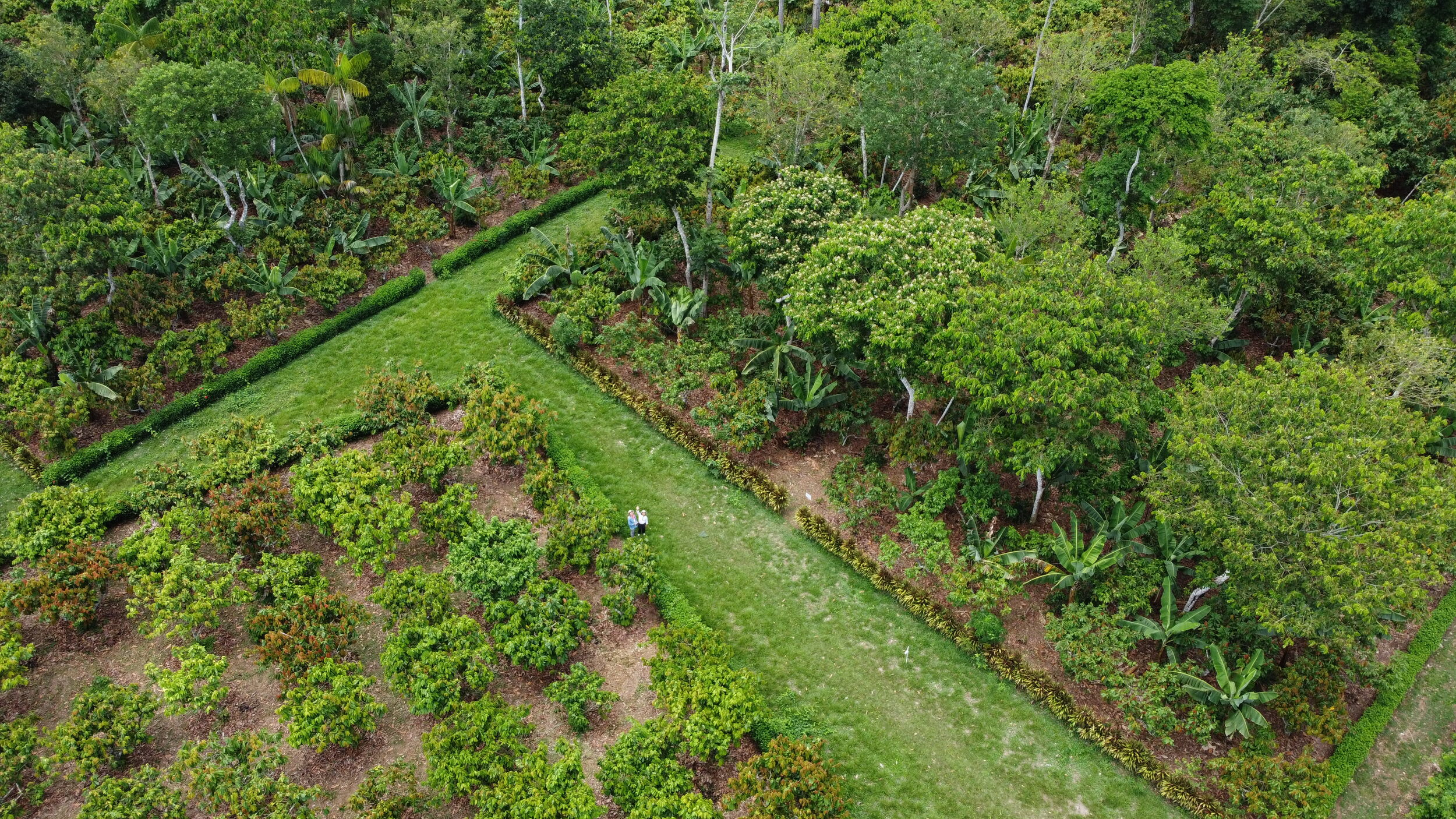
The project will be contributing evidence on how dynamic agroforestry (DAF) systems can improve environmental, economic, and social outcomes in cocoa farming. Specifically, it examines how these systems enhance biodiversity, improve soil fertility, increase ecological resilience, and diversify farmers’ income sources.
By analysing adoption patterns, identifying barriers and drivers, and assessing cost-benefit ratios and investment capacities, the project develops recommendations to promote a wider uptake of DAF. This supports more resilient, climate-friendly, and economically viable cocoa production systems in different tropical contexts.
What steps are taken during the project?
Based on a thorough literature review, the project reviews the development of the cocoa sector and identifies the main factors influencing the definition of the cacao production systems and their impact in different contexts. The development and role of dynamic agroforestry (DAF) is presented and discussed versus other production systems, highlighting also trade-offs that exist especially between economic and environmental outcomes and impact.
Based on the two case studies from Ecuador and Ghana, it then assesses the extent and characteristics of DAF adoption among smallholder farmers. Building on these and interactions with key informants, the project identifies and discusses the key drivers and barriers influencing DAF adoption. Finally, it develops recommendations to support the wider uptake of DAF and similar sustainable cocoa production approaches.
How do you plan to communicate the outcomes to relevant stakeholders?
The study will be supported by a Study Advisory Board (SAB) consisting of interested members of the Cocoa Platform. The project outline and preliminary findings will be shared and discussed in this framework. The study will be shared with all members and presented in a special meeting for all interested. The final study document will then also be made available publicly.
Where do you see the greatest potential for other stakeholders in the cocoa sector and beyond to learn from the outcomes of this project?
The greatest potential for other stakeholders lies in using the project’s evidence and recommendations to inform decisions on investment, policy, and programme design. By providing insights into the performance, adoption dynamics, and socioeconomic viability of dynamic agroforestry systems, the project offers valuable lessons that can support the scaling of more sustainable and resilient cocoa production systems across different tropical regions.
Organisations involved