Digital Market Access and Agroforestry Reinvestment for Cocoa Cooperatives
What is the main objective of the project?
The project aims to transform SusChain from a traceability tool into a digital marketplace and supply chain platform for independent cocoa cooperatives in Bundibugyo, Uganda. It enables direct trade, EUDR/HREDD-compliant data capture, and market access for three farmer cooperatives, while reinvesting trade margins into resilient, agroforestry-based cocoa production.
How will the project contribute to sustainable cocoa production?
Cocoa in Bundibugyo is grown without synthetic inputs, but producers rarely capture quality or Fairtrade premiums due to bulk sale through intermediaries.
By digitising purchasing, plot, quality and compliance data, the project enables direct, transparent trade and channels a share of margins into an agroforestry reinvestment fund, financing shade trees, land restoration and climate-resilient farming across three pilot sites.
What steps are taken during the project?
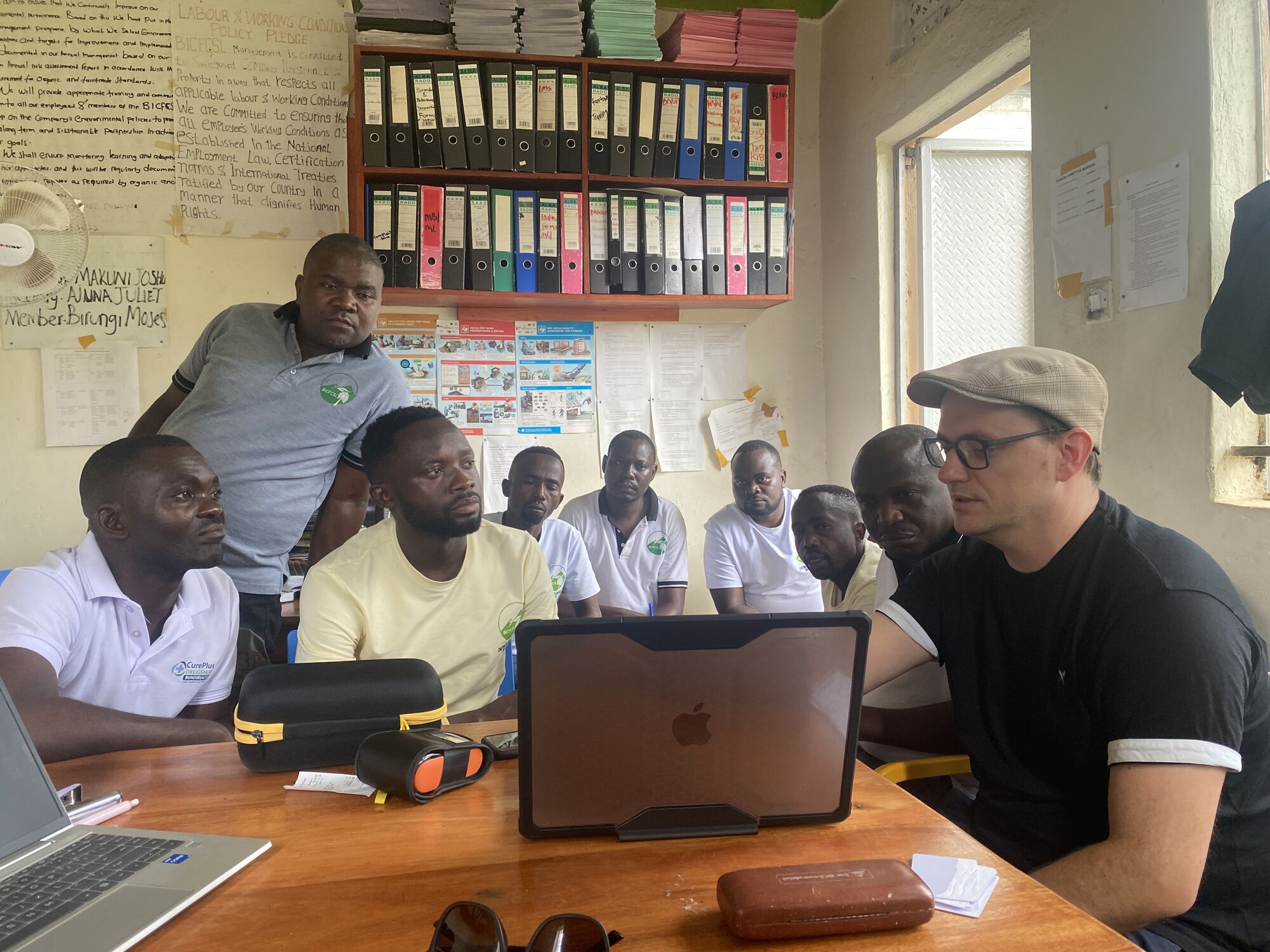
Implementation is phased: onboarding two additional partner cooperatives onto SusChain (one pilot cooperative is already active); digitally integrating 1,000 additional producers (total approx. 2,000); strengthening certification and compliance in one further cooperative; establishing two additional agroforestry pilot sites; supporting 200 producers with shade trees, seedlings and training; and further developing SusChain's marketplace, traceability and export-data functions.
What is innovative about this project?
SusChain evolves from a traceability tool into an integrated marketplace, supply chain and reinvestment infrastructure, free for cooperatives while ensuring full data ownership.
Its key innovation is the reinvestment model: instead of relying on voluntary funding, agroforestry investments are financed progressively through real trade flows, particularly a SusChain premium built into the trade margin, creating a market-based mechanism for restoring degraded land.
How does the project contribute to improving the (economic) situation of girls and women?
Gender is a practical implementation priority: the project promotes balanced participation of women in the local team and partner cooperatives, with a focus on involving women and young professionals. It improves women producers' access to training, data, certification and market information, strengthening their role in the value chain, and introduces a digital grievance system for more inclusive feedback.
How do you plan to ensure the scalability of the sustainable innovations implemented in the cocoa value chain?
The model is designed to be modular and replicable: the cooperative-focused software platform, compliance/monitoring modules and the agroforestry fund can be adapted to other cooperatives, regions and commodities such as coffee.
As trade volumes grow, additional resources generated through economies of scale can be reinvested to finance further resilience-relevant areas along the supply chain.
Organisations involved