Innovative Fermentation Process to Achieve Higher Income for Cocoa Farmers
What is the main objective of the project?
The project aims to improve the livelihoods of cocoa farmers by validating and optimising an innovative post-harvest fermentation system that delivers higher cocoa quality and complete traceability, and raises total farmer income through PES premiums, lower post-harvest costs, and higher usable bean yield.
It addresses major challenges facing the cocoa sector, including low farmer incomes, inconsistent bean quality, limited traceability, and increasing sustainability and due diligence requirements. By generating scientific evidence on the fermentation process, the project will support the large-scale deployment of a system that makes cocoa production more efficient, transparent, and economically attractive for farmers.
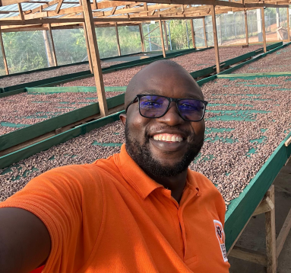
“This project goes beyond validating a new fermentation process. It examines whether better cocoa quality can translate into greater value, reduced workload and improved livelihoods for farmers.”
How the project contributes to sustainable cocoa production
The project contributes to a more sustainable cocoa value chain by transforming post-harvest processing. COOKO's centralised fermentation system improves cocoa quality, reduces post-harvest losses, enables full traceability from farm to processing facility, and supports compliance with international regulations such as the EU Deforestation Regulation (EUDR).
Higher-quality cocoa and more efficient processing raise total farmer income through a combination of PES premiums, lower labour and production costs, and higher usable bean yield. The project also promotes responsible land use by increasing the value generated on existing cocoa plantings.
The initiative directly supports the SWISSCO Roadmap 2030 by contributing to higher farmer incomes, improved traceability, sustainable production practices, climate action, and stronger collaboration between research institutions, the private sector, and cocoa producers.
What steps are taken during the project?
The project follows a structured research and implementation approach. It begins with an analysis of the existing COOKO fermentation system and the development of an experimental design. Building on this, the project assesses the economic and social impacts on farmers, covering income, workload, labour distribution, and satisfaction, and explores how the fermentation process can be optimised and scaled through functional microbial cultures.
These insights are then tested in field fermentation trials at the COOKO facility in Cameroon, where the resulting cocoa is analysed for its microbiological, chemical, physical, and sensory quality. Finally, the scientific results and recommendations are shared to support the wider adoption of the technology.



What is innovative about this project?
The project introduces a patented airtight anaerobic fermentation process that fundamentally changes how cocoa is fermented after harvest. Instead of traditional on-farm fermentation, cocoa is collected in sealed, IoT-enabled containers that preserve quality while recording traceability data from the moment pods are opened.
Combined with centralised fermentation, geolocation tracking, digital traceability, and scientific process optimisation, this creates a scalable solution that delivers more consistent cocoa quality, reduces contamination risks, lowers processing costs, and helps producers comply with growing sustainability requirements. The partnership with ZHAW provides the scientific validation needed to standardise and scale this innovation.
How the project contributes to improving the (economic) situation of girls and women
The project reduces the labour burden traditionally associated with cocoa fermentation and drying tasks that are often carried out by women. By centralising these post-harvest activities, women spend less time on physically demanding work and can dedicate more time to other economic or household activities.
Payments for Ecosystem Services (PES) premiums, lower post-harvest costs, and higher usable bean yield increase household income, while digital payment systems promote greater financial inclusion and transparency. The project also encourages equal participation of women in training activities and supports fair access to economic opportunities throughout the cocoa value chain.
How the project ensures the scalability of the sustainable innovations implemented in the cocoa value chain
The project is designed for scalability through a standardised and scientifically validated fermentation process that can be replicated across cocoa-producing regions. Combined with digital traceability, centralised processing, and strong partnerships, the model enables wider adoption while improving quality, farmer incomes, and compliance with sustainability standards.
Organisations involved